
Embroidery hoop or in-hand? How to decide whether to embroider using a frame or in-hand
There is much to be said for using an embroidery hoop (also called ring or frame): An embroidery hoop stretches the fabric evenly to enable the stitcher to make consistent and precise stitches. It also prevents the stitches from warping or puckering the fabric.
But there is another way and it is called in-hand embroidery, where you use only your hands to hold and stretch the fabric. This method allows you to increase and relax the fabric’s tension as you stitch, which has several advantages as you will see below.
If you work with an embroidery hoop, you have to adjust your stitching method
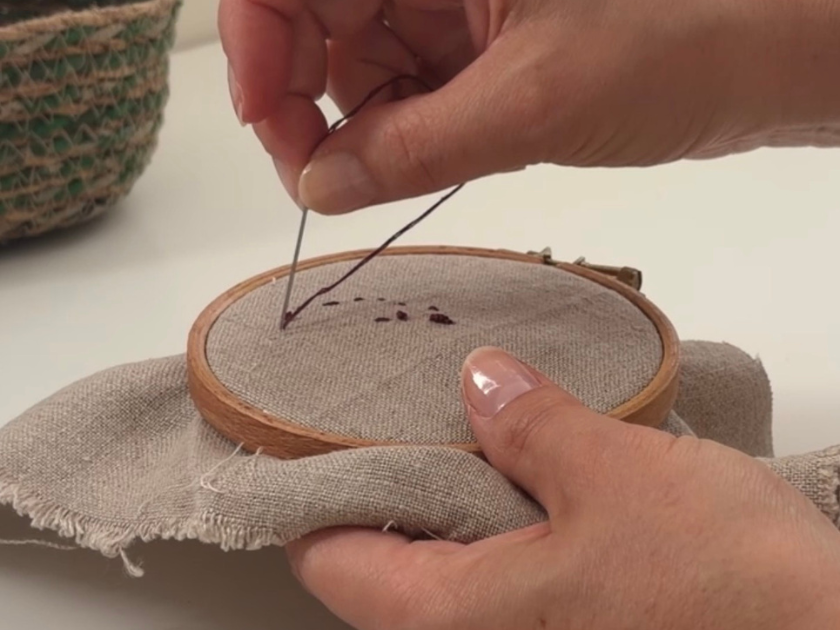
Hoop embroidery lends itself to the “stabbing method” of stitching: you pierce the fabric with the needle pointing down vertically, let go of it and pick it up again from the other side of the fabric, pulling the thread tight each time. You can use the same hand to stitch if you are holding your embroidery hoop in your other hand, or you use both hands for stitching if your hoop is attached to a stand. Using both hands can help achieve very even stitches as you can use one hand to pull the thread and hold loops of thread in place before stitching them down with the other hand.
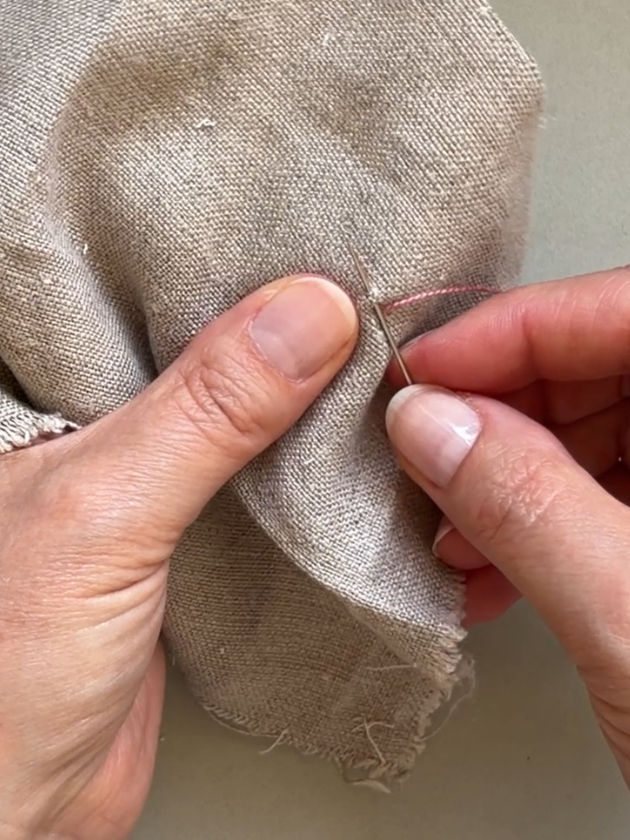
If you embroider in-hand, you use the “sewing method”. As the name suggests, you move the needle in and out of the fabric in one motion (such as with a running stitch and backstitch). You can stitch with one hand and keep your hand over the top of the fabric. It is possible to use the sewing method in a hoop, but it is fiddly, takes practice and it can compromise the tightness of the fabric within the hoop.
When deciding whether to embroider with or without a hoop, ask yourself these questions:
What type of fabric are you embroidering?
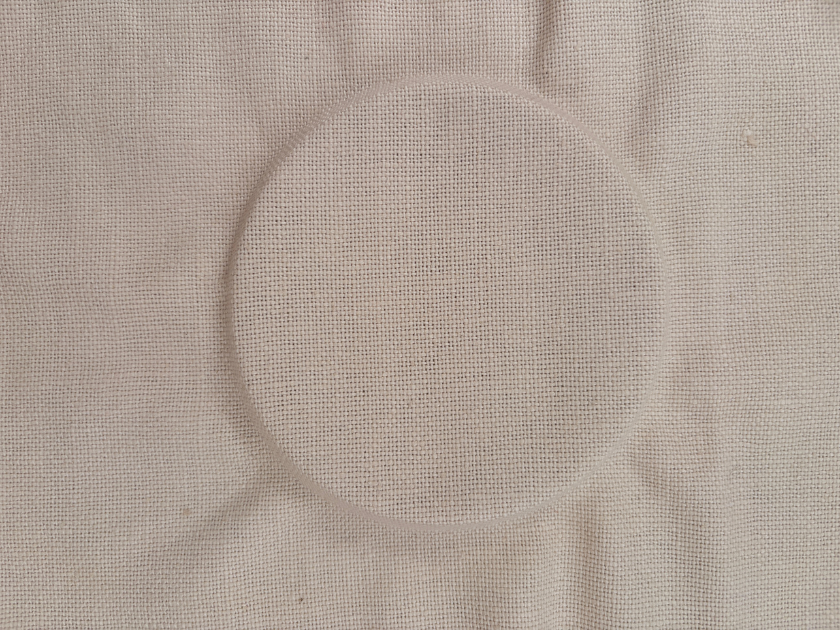
If you are embroidering light weight fabric like silk or fine cotton, you stitches are more likely to pucker the fabric if you work without a hoop. It’s advisable to bind the hoop with a soft ribbon before you stretch the fabric over it as this ensures the hoop doesn’t leave a ring-shaped crease on your fabric.
What is the colour of the fabric?
Attaching the fabric to a hoop means that your hands won’t have to touch it, minimising the risk of staining the fabric with your hands - even if they are washed, the skin on your hands will release oil and perspiration which can stain the fabric. Interesting fact: the embroiderers who worked on Princess Catherine's wedding dress had to wash their hands every 30 minutes because the fabric was so delicate.
How large is the fabric you are embroidering?
If you are embroidering a large motif on a large piece of fabric, think about how the hoop might affect the stitches you have already made as you need to reposition the hoop around the fabric. Smaller projects can be embroidered in a hoop without repositioning. If embroidering a very large piece, you may wish to invest in a scroll frame or a Q-snap frame rather than using a hoop, as these have all the advantages of a hoop, but there is no risk of damaging the stitches you have already made or creasing the fabric.
Which stitches will you use predominantly in your embroidery?

Certain stitches are easier to do with the sewing method than the stabbing method, e.g. running stitch, chain stitch, back stitch are good for in-hand embroidery, whereas woven stitches and knotted stitches are easier to do in a hoop as you need to use both hands for stitching.
Where do you intend to embroider?
Are you happy to work sitting at a desk or on a chair using a seat frame or do you want to take your embroidery with you on travels or short journeys?
What is your personal preference?
Do you like the feel of the fabric and do you enjoy manipulating it with your hand to create the necessary tension? If yes, you can skip the hoop.
How patient are you?
Working with a hoop, in my opinion, requires a greater degree of patience because you have to be prepared to sit at a desk or in front of a stand while you embroider. Even if you hold the hoop in your hand (which means you can sit anywhere), you also need more patience because you have to move your stitching hand from the top to the bottom of the fabric for every stitch.
How important is it important to you to achieve precise, even stitches and a professional finish?
Using a hoop will inevitably give your stitching greater precision - there won't be any puckering and your ability to work with both hands means that you can put all your effort into ensuring the thread's tension is correct in every stitch, and your stitch size is consistent throughout. If you are designing your embroidery as you go rather than working from a pattern, and precision isn't your aim, then it might be more enjoyable for you to work without a hoop.
Are you beginner?
If you are a beginner, I would suggest you try both methods and see how each feels to you both in terms of the movement of your hands and the end result.


